

Attack surface discovery
From one domain, xSpctr maps the names, addresses, services and certificates that belong to you, and keeps the map current every day.
What xSpctr finds
Names from certificate logs, DNS and public sources, including forgotten test hosts.
The addresses your names resolve to and the network blocks registered to you.
What answers on each address: web, mail, VPN, remote access, databases and more.
Every certificate issued for your names, with its issuer and expiry, so nothing lapses by surprise.
The software behind each site and service, with versions where they can be read.
Where each host runs and who operates its network, to tell yours from a supplier’s.
Inventory
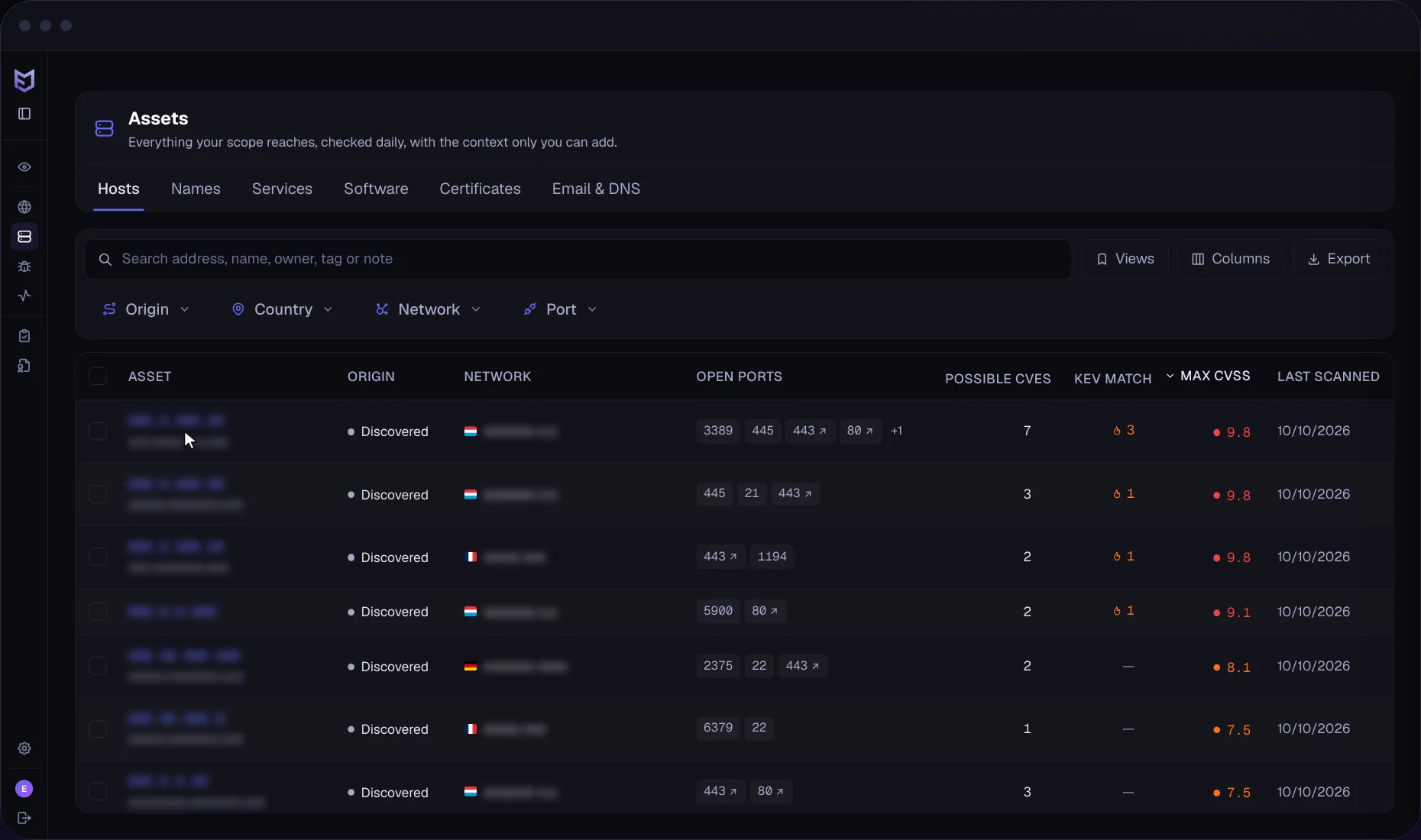
The inventory lists everything in scope, checked daily. Sort by risk, filter by country, network or port, and add the owner and notes only you know.
Scope control
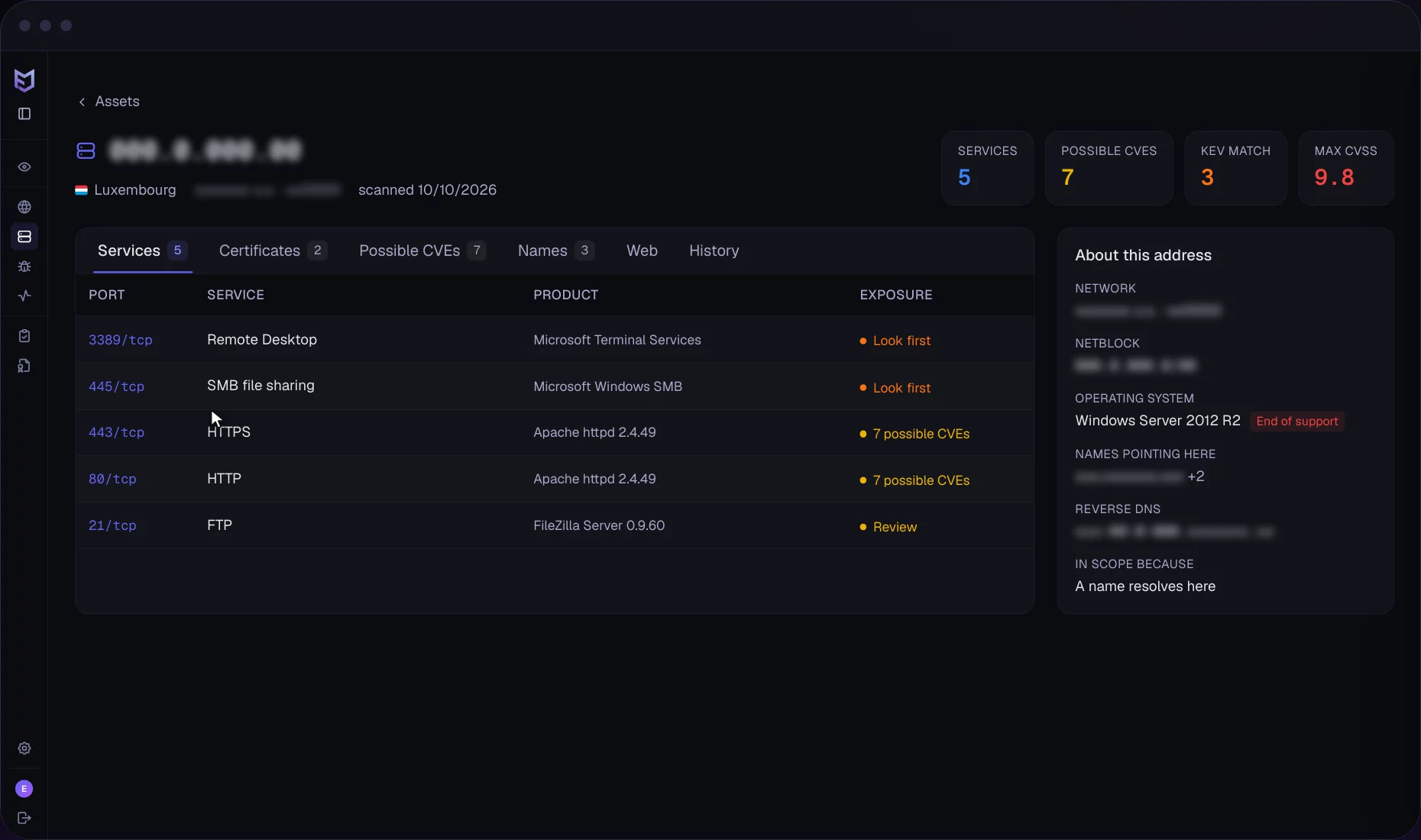
Every asset carries the reason it is in scope: a verified domain, a name that resolves to it, or a network you registered. You stay in control of what is tested.
Questions
Certificate transparency logs, DNS, regional internet registries and internet-wide scan data, combined with light checks of the hosts you have verified.
Every day. New names, addresses and services appear in the inventory and, if they matter, in your alerts.
Yes, when they are linked to it: shared certificates, network blocks registered to you, or names that resolve to your addresses. You can also add further domains to your scope.
Tell us about your organisation and we will set you up.