

Exposure management
xSpctr turns raw scan data into a short, ranked list of findings, matched against known-exploited vulnerabilities and exploit likelihood.
Prioritisation
Every finding lands in one tier, so the team always knows what comes next.
Exposed admin services and known-exploited CVEs.
Outdated software and possible CVEs to decide on.
Expiring certificates, unusual services and names.
Attribution and notes, for the full picture.
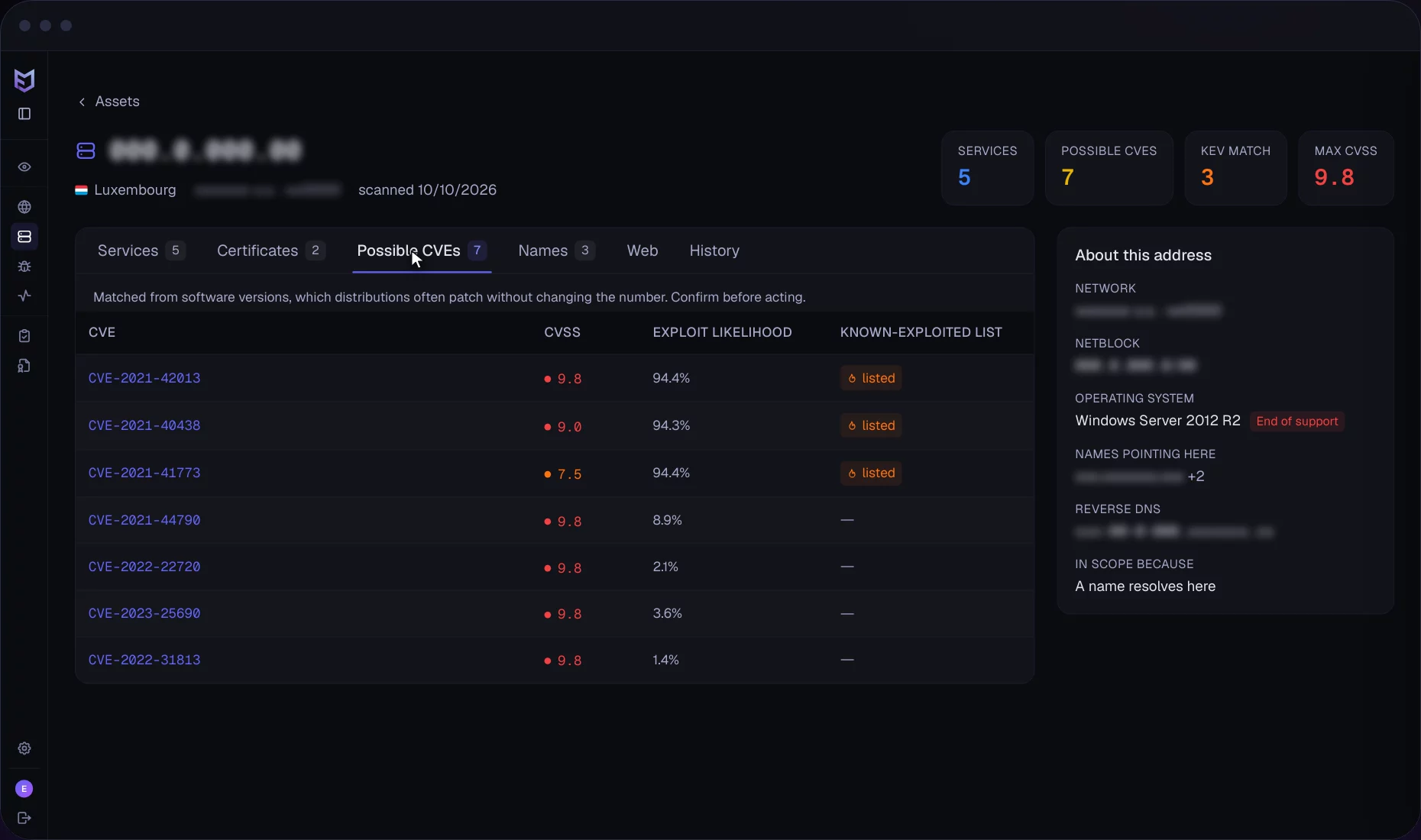
Vulnerabilities
xSpctr matches observed software versions against known vulnerabilities, adds the known-exploited list and exploit likelihood, and says clearly when a match still needs confirming.
Workflow
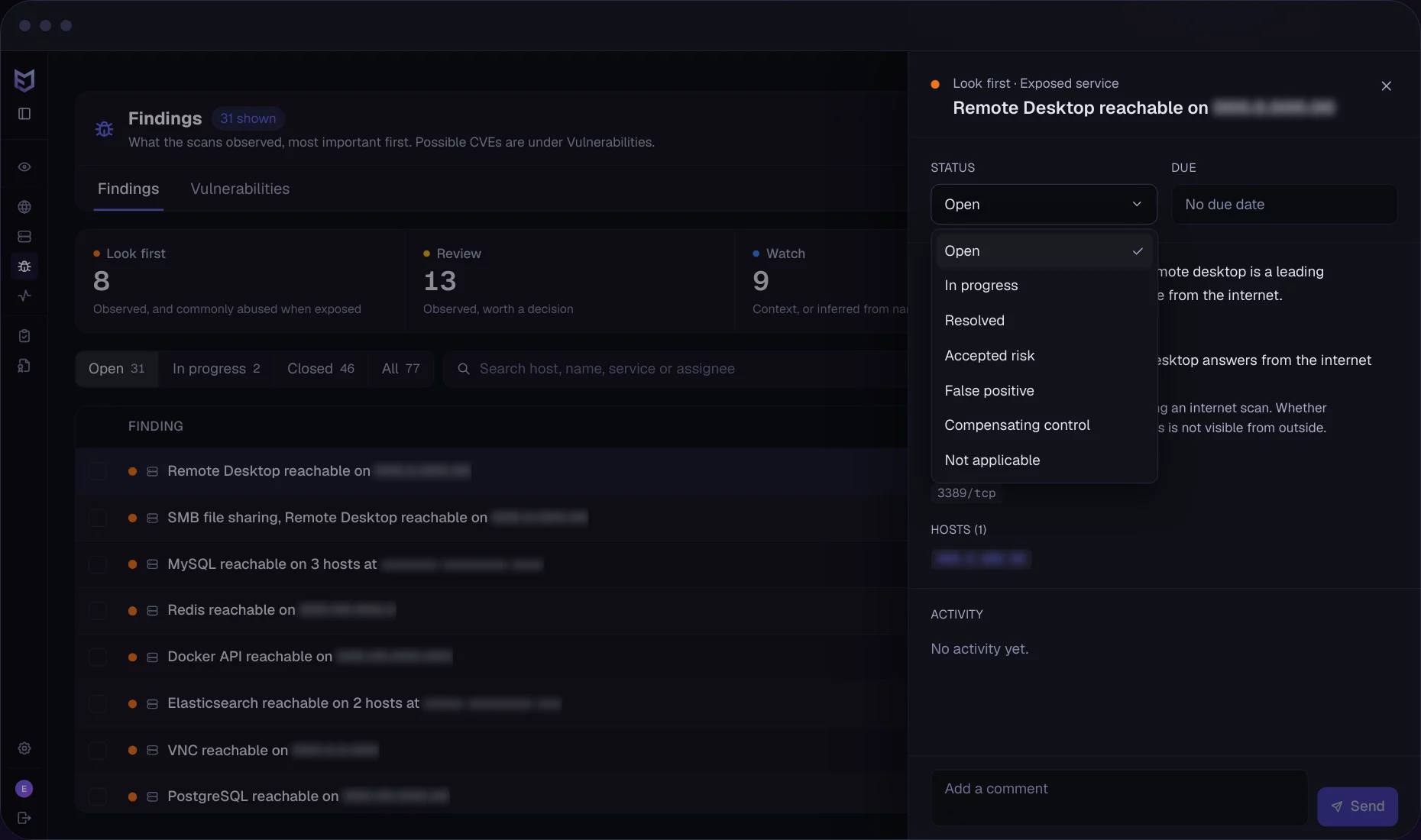
Open a finding to see what was observed and how to fix it, then set a status, an owner and a due date. Every change is recorded in its activity.
Questions
It combines what is exposed (for example remote access or a database open to the internet) with threat intelligence: known-exploited vulnerabilities and the likelihood of exploitation.
No. Findings are grouped by issue rather than by host and port, and ranked in four tiers, so a large surface still produces a short list.
Yes. Accepted risk, false positive, compensating control and not applicable are all statuses, each with a record of who decided and when.
Tell us about your organisation and we will set you up.